|
ERNST CASSIRER We live in a world of symbols For Cassirer, the world in which we live is shaped by our ideas. We do not encounter “pure” reality but reality shaped by our cultural ideas, or what he calls “symbols” – aspects of language, myth, art, religion that have intuitive spiritual qualities. Although rational thinking is also an important part of human life, symbolic thinking is more important because it expresses spiritual energies to create and develop, and because it is more central in human culture. The following is slightly adapted from his book An Essay on Man (1944).
The human being lives in a symbolic universe. Language, myth, art, and religion are parts of this universe. They are the various threads which weave the symbolic net, the tangled web of human experience. All human progress in thought and experience is based on refining and strengthening this net. No longer can the human being confront reality immediately; he cannot see it face to face. Physical reality seems to recede the more human symbolic activity advances. Instead of dealing with the things themselves, the human being is, in a sense, constantly conversing with himself. He has enveloped himself so much in linguistic forms, in artistic images, in mythical symbols or religious rites that he cannot see or know anything except through this artificial medium.
From the point of view at which we have just arrived, we may correct and enlarge the classical definition of man. In spite of all the efforts of modern irrationalism, this definition of man as an animal rationale has not lost its force. Rationality is indeed an inherent feature of all human activities. … But it is easy to see that this definition fails to cover the whole field. It offers us a part for the whole. For side by side with conceptual language there is an emotional language; side by side with logical or scientific language there is a language of poetic imagination. … Reason is a very inadequate term with which to comprehend the forms of man's cultural life in all their richness and variety. But all these forms are symbolic forms. Hence, instead of defining man as an animal rationale, we should define him as an animal symbolicum. By so doing we can designate his specific difference, and we can understand the new way open to man— the way to civilization. |

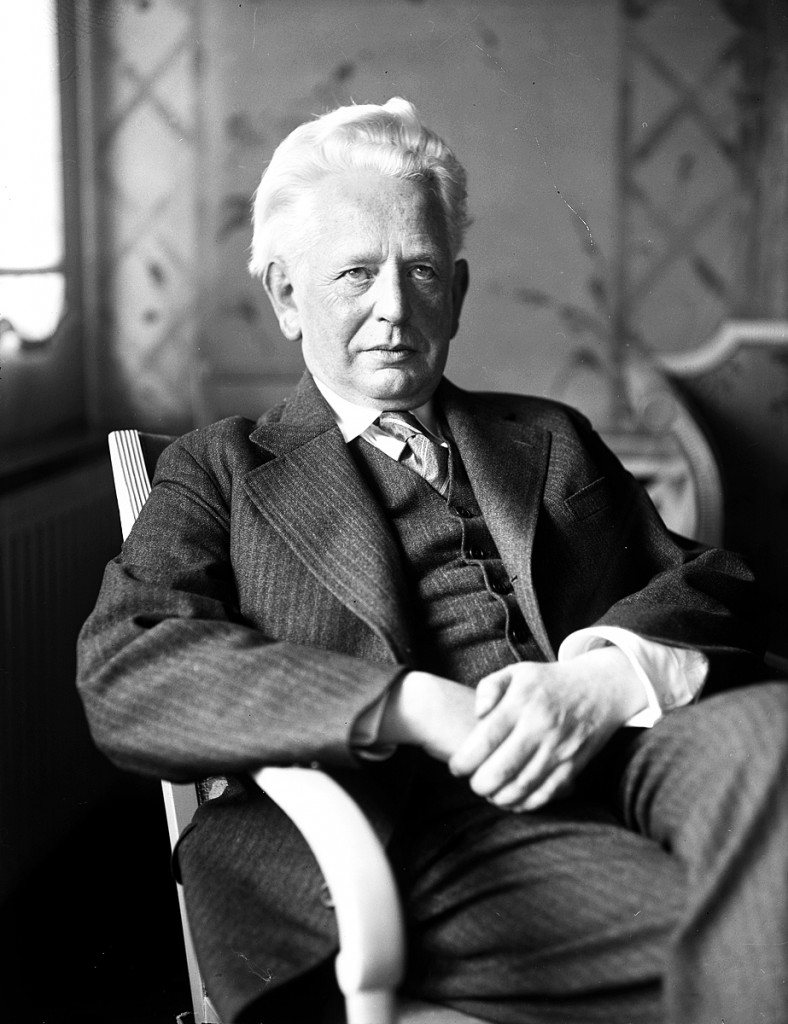 Ernst Cassirer (1874-1945) was a German-Jewish philosopher, who became notable for his work on human symbolism, and was influential before World War II. He was born in Silesia (now part of Poland) and studied at the University of Marburg. After the rise of the Nazis in 1933, he left Germany for the USA, and became a university professor at Yale and Columbia Universities.
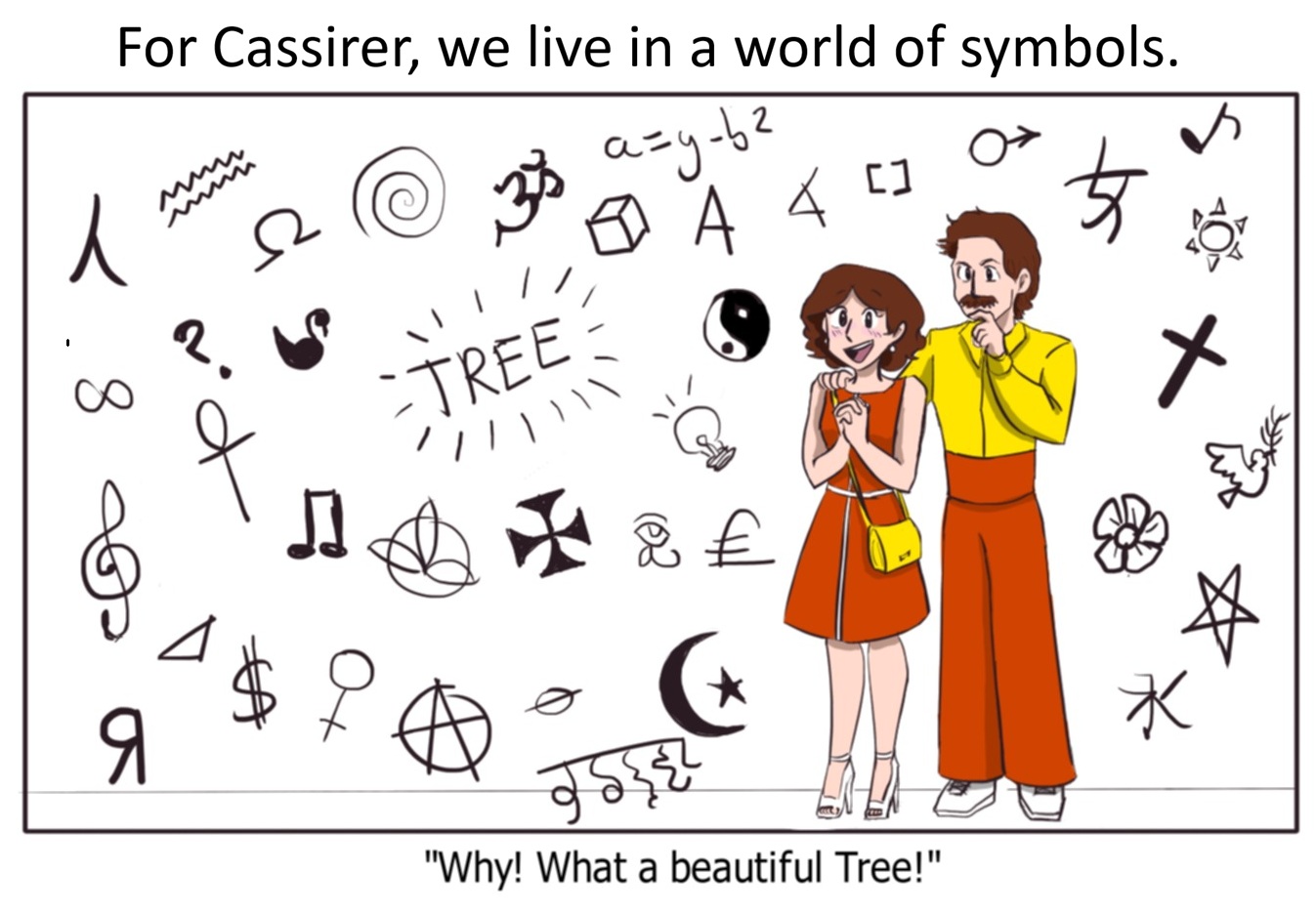 His situation is the same in the theoretical as in the practical sphere. Even here man does not live in a world of hard facts, or according to his immediate needs and desires. He lives, rather, in the midst of imaginary emotions, in hopes and fears, in illusions and disillusions, in his fantasies and dreams…