The Philo-Practice Agora
Electronic library for philosophical practitioners from around the world

GIACOMO LEOPARDI

 Music is not about beauty

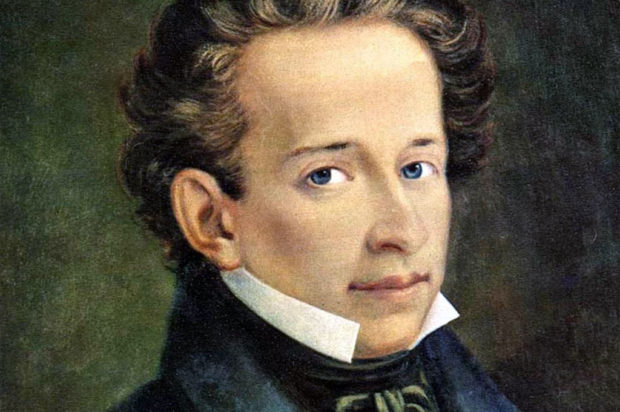
LeopardiGiacomo Leopardi (1798-1837) was a major Italian thinker and poet who died at the age of 39. The following is from his book THOUGHTS (Pensieri, 1837), a large collection of fragments about humanity, which are often pessimistic and dark. In the following fragment Leopardi argues that the pleasure of music does not come from the laws of beauty, but simply from the qualities of the sound, and the way they are mixed together, in other words their harmony.


[3422]

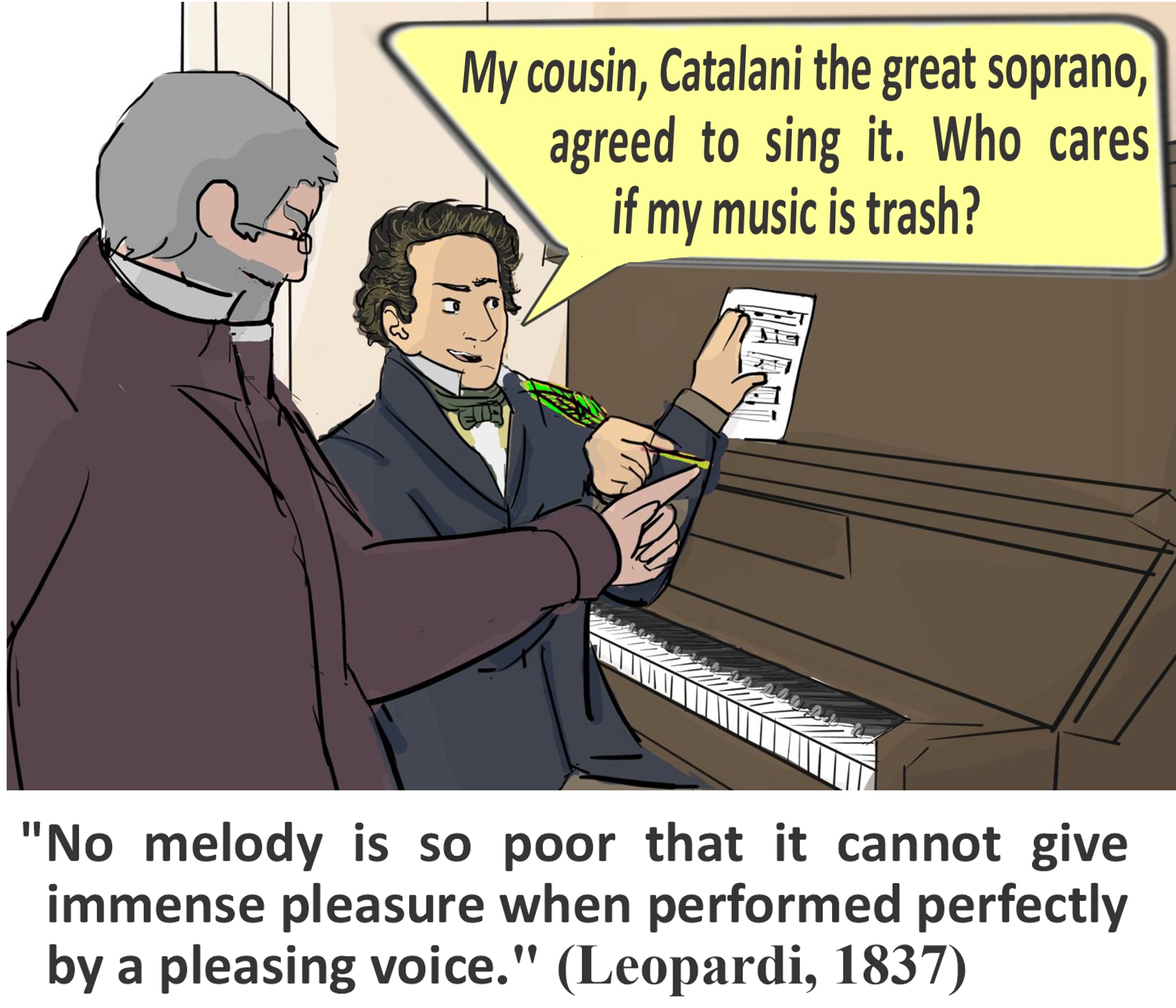
We realize that the miracle of music, the force which it naturally exerts on our emotions, the pleasure which it naturally gives us, its power to arouse enthusiasm and imagination, etc., is based on sound and voice […] when it is a combination of sounds and voices that is naturally pleasing to the ear; and we realize that it is not a matter of melody; and we realize that consequently the main point of music, and its effects, do not strictly speaking belong to the theory of the beautiful […] – we see all this from the fact that there is no melody that is so poor that, if performed perfectly by a pleasing instrument or voice, is unable to give immense pleasure. And conversely, there is no melody that is so beautiful that if performed, for example, with sticks on a piece of wood, or on several pieces of wood corresponding to the various tones, or on any other unattractive instrument or voice, is able to provide any delight whatsoever, even if performed perfectly.

In recent times people have had opportunity to notice the above truths, when according to reports, the astonishing voice of the singer Catalani has almost recreated the miraculous effects of ancient music in her listeners. Such effects certainly did not derive mainly or even partly from the melodies. These melodies, besides the fact that they could have been sung by a thousand others, are well known to be most trivial and dull. All the delight, therefore, originated from the voice of the singer, that is, from the voice’s qualities that are naturally pleasing to the human ear, all of which are independent of musical correctness: extraordinary sweetness, flexibility, speed, range, etc., a singing voice that is resonant, clear, pure, penetrating, oscillating, tinkling, like strings of some other musical instruments, etc., etc.

[…] It is not the Music Leopardi2melodies in themselves, or their novelty, that produce this delight in them. It is the instruments, the voices, which are so refined and perfected by us […]. When the perfect quality of these organs is combined with the art of using them perfectly – that is, deriving the most pleasing sounds from them etc., such as the person with no art whatsoever could not do, when this is also combined with the art of harmonizing these organs together in the way that is naturally most pleasing to the ear (like the art of mixing flavors), it results in a sweetness […] which produces a form of supreme pleasure and marvelous effect. Such pleasure and effects have nothing whatsoever to do with beauty, because they have nothing to do with correctness. […] In view of these observations it will be possible to explain effectively, and better than any other way, many of the miracles of ancient music, especially those told about nations in the most unsophisticated times, such as Biblical Saul and David, etc. These miracles did not spring from the qualities of the melodies, as is commonly believed, but from the natural or artificial qualities of the instruments or voices, and the methods of playing or using them, because such qualities gave rise to sounds, or harmonies of sounds, that were extraordinarily pleasing to the ear in their own right – extraordinarily, I mean, for those nations and times.

×
Stay Informed

When you subscribe to the blog, we will send you an e-mail when there are new updates on the site so you wouldn't miss them.